

Tokyo Trial Explicitly Established Japanese Atrocities in Nanking, Not a Mere “Incident”!
According to CCTV News, Japan’s Nagasaki Atomic Bomb Museum plans to replace “massacre” in its exhibition text on the Nanjing Massacre with “Nanking Incident, in which many civilians and prisoners of war were killed”. History must not be whitewashed; the law has delivered its judgment. The atrocities established at the Tokyo Trial included massacres, rape, looting and arson—not massacres alone! What appears to be a change in wording by Nagasaki is, in fact, an attempt to narrow the scope of the Japanese army’s atrocities in Nanking, distort the judgment of the Tokyo Trial and obscure the brutality of Japan’s invasion of China! The Judgment of the International Military Tribunal for the Far East runs to more than 1,200 pages and devotes a separate section to Japanese atrocities in Nanking. Drawing on evidence from a range of sources, it gives a concise account of the Japanese army’s arson, killings, looting and rape in Nanking, Iwane Matsui’s movements, protests against the atrocities by third parties, and the fact that Matsui himself and the Japanese government knew of the atrocities.
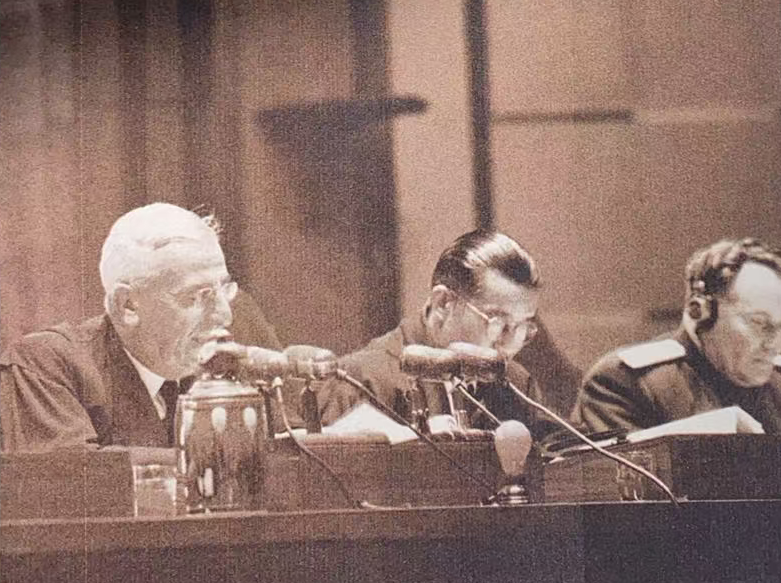
Tribunal President William Webb reads the judgment on November 5, 1948. From left: Tribunal President William Webb, Chinese Judge Mei Ruao and Soviet Judge Ivan Zaryanov
At the Tokyo Trial, the prosecution sifted through a vast body of testimony to identify key, credible evidence. Drawing on extensive survivors’ testimony, records kept by foreign third parties and Japanese military archives, the tribunal established in an international judicial ruling the heinous crimes committed by the Japanese army in perpetrating the Nanjing Massacre.
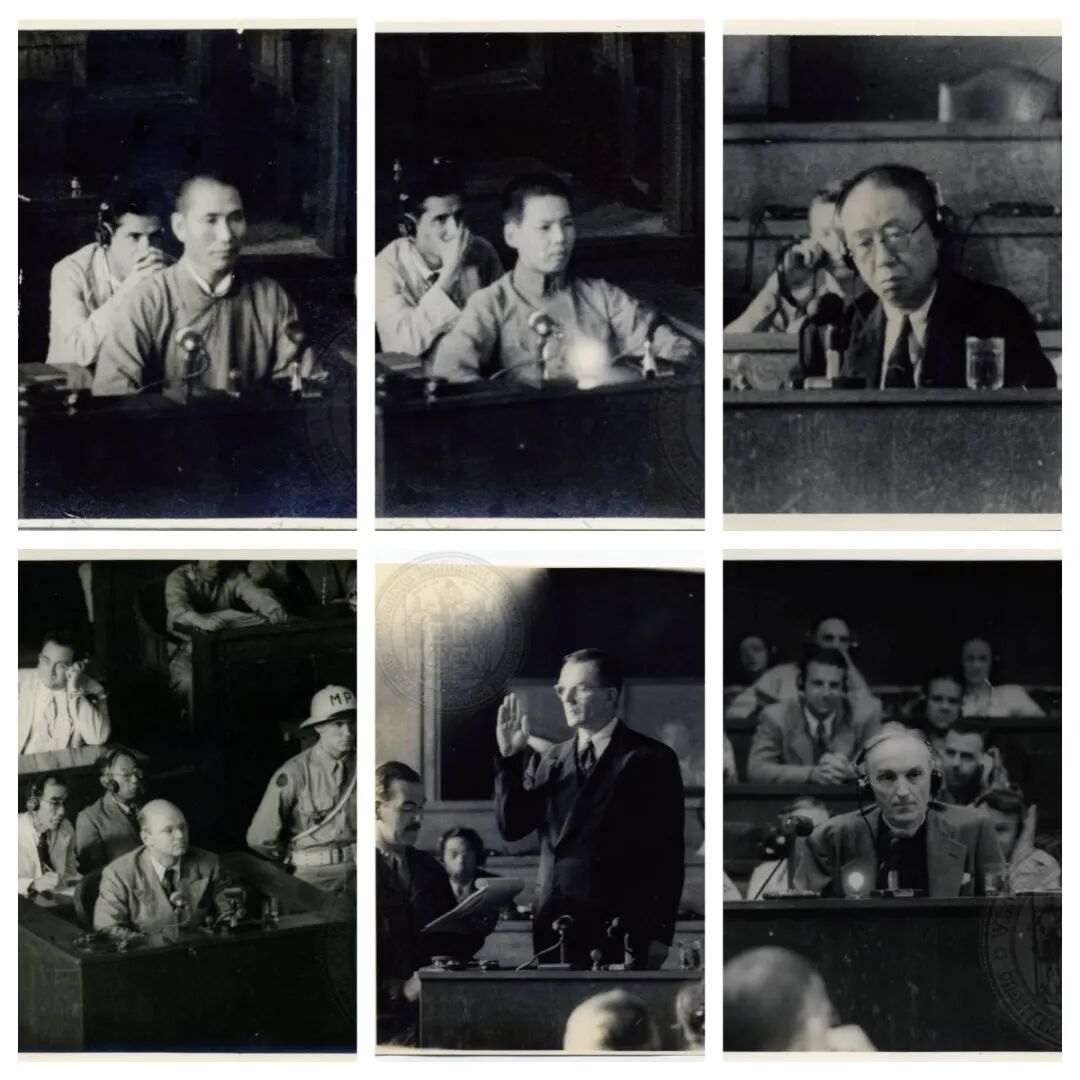
Wu Changde, Chen Fubao, Xu Chuanyin, Robert Wilson, Miner Searle Bates and John Magee testify before the International Military Tribunal for the Far East
John Magee, an American clergyman, testified about the tragedy that befell Xia Shuqin’s family. Japanese troops killed seven of the nine family members. Her two elder sisters and her mother were raped and then murdered.
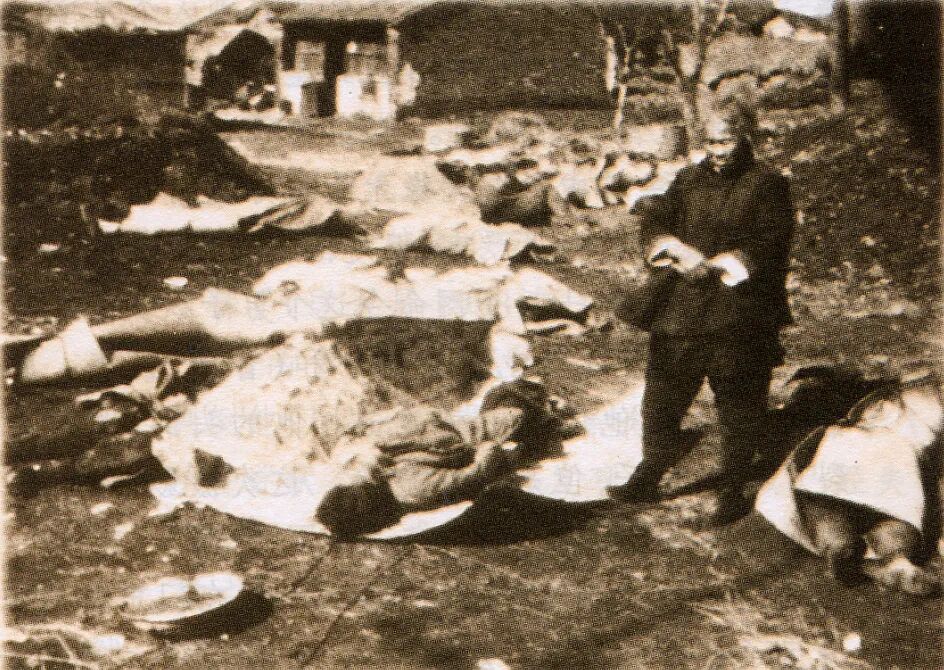
Magee filmed the tragic aftermath of the attack on Xia Shuqin’s family
In court, the prosecution read out a letter to the German Foreign Office from Oskar Trautmann, then Germany’s ambassador to China, describing the devastation of Nanking: “Now it is the turn of Taiping Road, Zhongshan East Road, Guofu Road and Zhujiang Road. The entire southern part of the city and the Confucius Temple area were completely burned down after being looted. In percentage terms, 30 to 40 percent of Nanking was destroyed by fire.”
In April this year, diaries of David Nelson Sutton, a U.S. assistant prosecutor at the Tokyo Trial, entered the Memorial Hall’s collection, adding further compelling evidence of the Nanjing Massacre. An 89-page document titled Report from China: Atrocities Against Civilians in Nanking, with its cover inscribed by Sutton, opens with an overview of the Nanjing Massacre and contains 27 statements by Chinese witnesses. A 65-page trial transcript presents medical and eyewitness evidence of the Nanjing Massacre. Handwritten by Sutton, the diaries are his original records of his work during the Tokyo Trial.
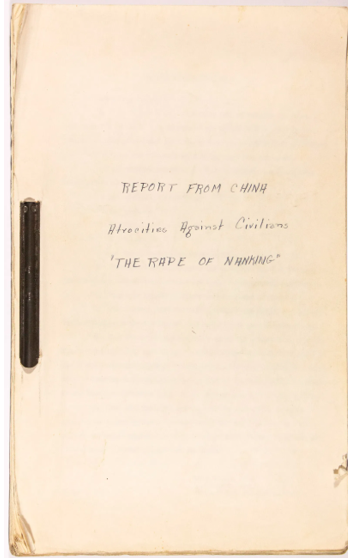
Report from China: Atrocities Against Civilians in Nanking
History must not be distorted, and justice must not be desecrated. The judicial findings of the Tokyo Trial, extensive Chinese and foreign historical records, vivid witness testimony and firsthand evidence preserved in the Memorial Hall’s collection together provide a firm foundation for the historical truth of the Nanjing Massacre. The suffering of the 300,000 victims must not be ignored, and historical facts supported by overwhelming evidence must not be denied!