

Russian Museum Directors Visit Memorial Hall with a Russian Girl as Their Guide
On September 5, a delegation from Russia’s museum and cultural heritage sector visited the Memorial Hall of the Nanjing Massacre Victims (by Japanese Invaders). Leaders of Russian institutions, including the Gorki Leninskiye Museum-Reserve, the Victory Museum and the Moscow Kremlin Museums, came together at the Memorial Hall. Through museum exchanges, they sought to deepen cultural ties between China and Russia, remember the suffering caused by war and preserve memories that sustain peace.
An Immersive Visit
Bridging Languages to Engage with a Painful Past
Liza, a young Russian girl who serves as a Zijin Cao international volunteer at the Memorial Hall, guided the delegation in Russian throughout the visit. From the Memorial Hall’s iconic commemorative sculptures and the remains of victims to its extensive historical archives and witnesses’ testimony, Liza explained this painful history to the visiting experts in her native language, with care and sincerity.
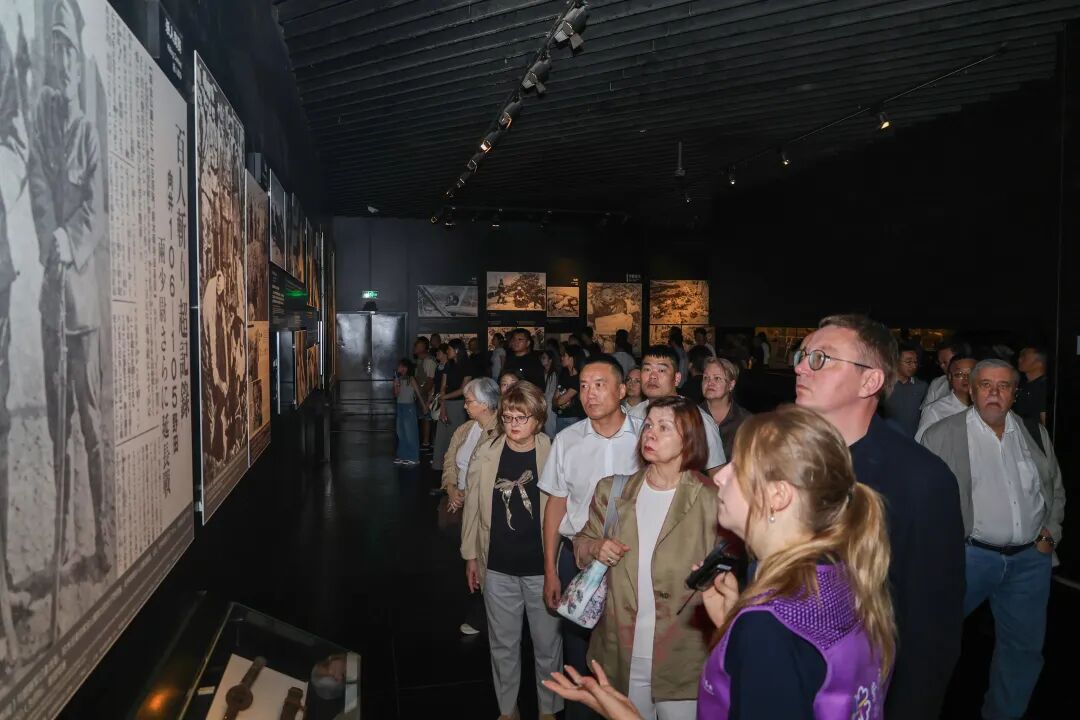
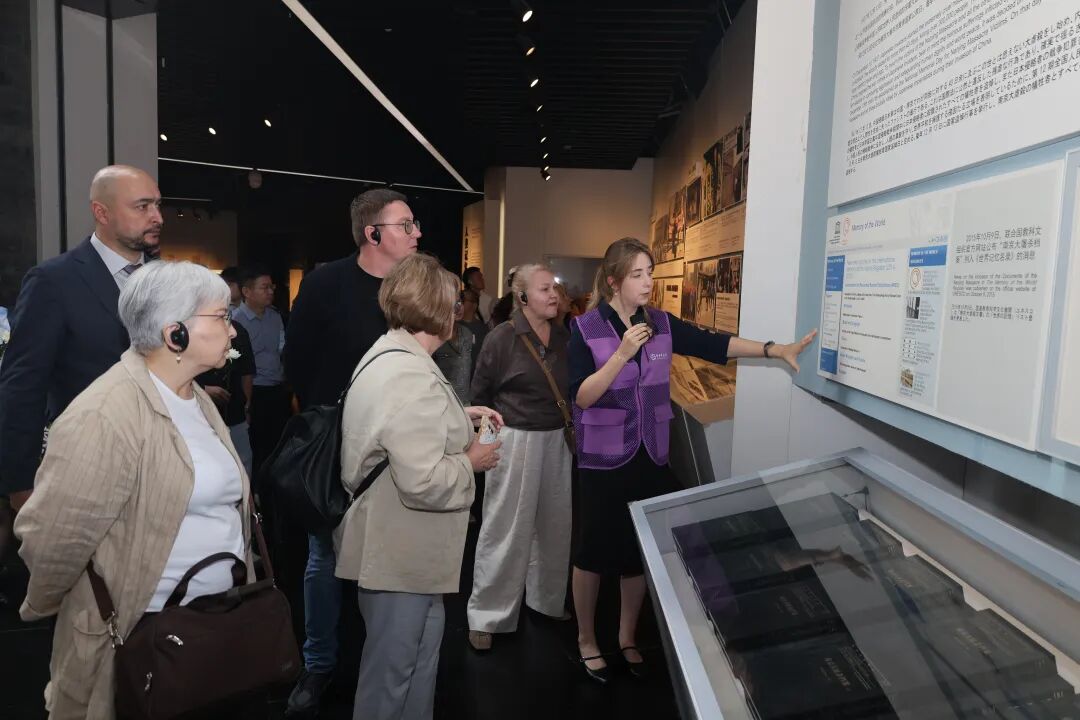
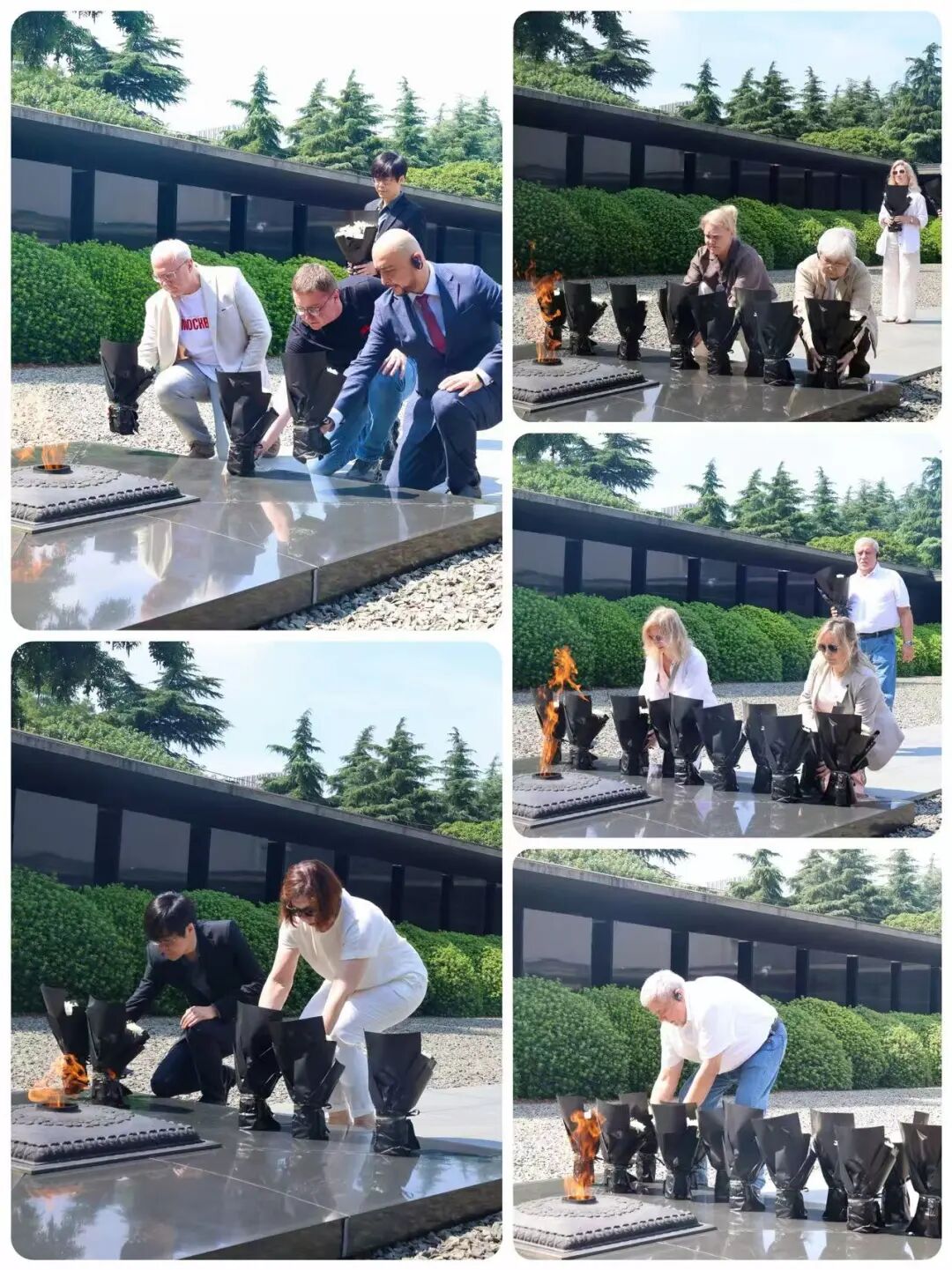
A solemn atmosphere prevailed throughout the visit. The Russian delegates moved slowly through the exhibits, pausing to listen attentively and study the historical records and artifacts. They reflected deeply on the suffering that war has inflicted on humanity. At Memorial Square, all members of the delegation stood in silent tribute and laid flowers in remembrance of the victims of the Nanjing Massacre.
Discussion and Exchange
“The Memorial Hall Has Left an Indelible Impression on Me”
During the discussion, the two sides recalled the long history of close cooperation between Chinese and Russian museums and cultural heritage institutions. Russia’s Victory Museum hosted exhibitions on the Nanjing Massacre in both 2010 and 2011. These exhibitions brought Nanjing’s painful history to the attention of the Russian public and laid a firm foundation for sharing memories that promote peace in both countries.
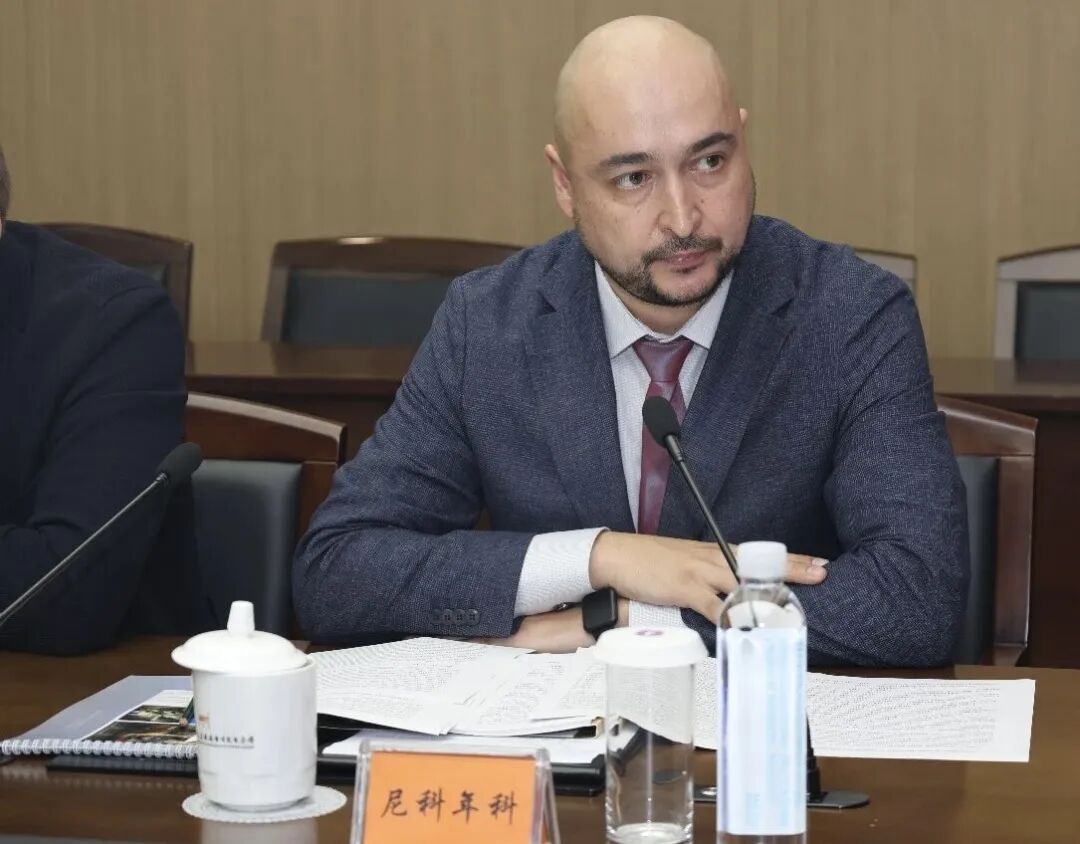
Artem Gennadyevich Nikonenko, Deputy Director of the Victory Museum, said, “Russia holds historical records of the Nanjing Massacre. Interviews we previously conducted on the streets of Moscow also showed that many people know about the Nanjing Massacre, a tragedy of the Second World War. Visiting today, I am greatly impressed by your work in uncovering and preserving historical artifacts and records.”
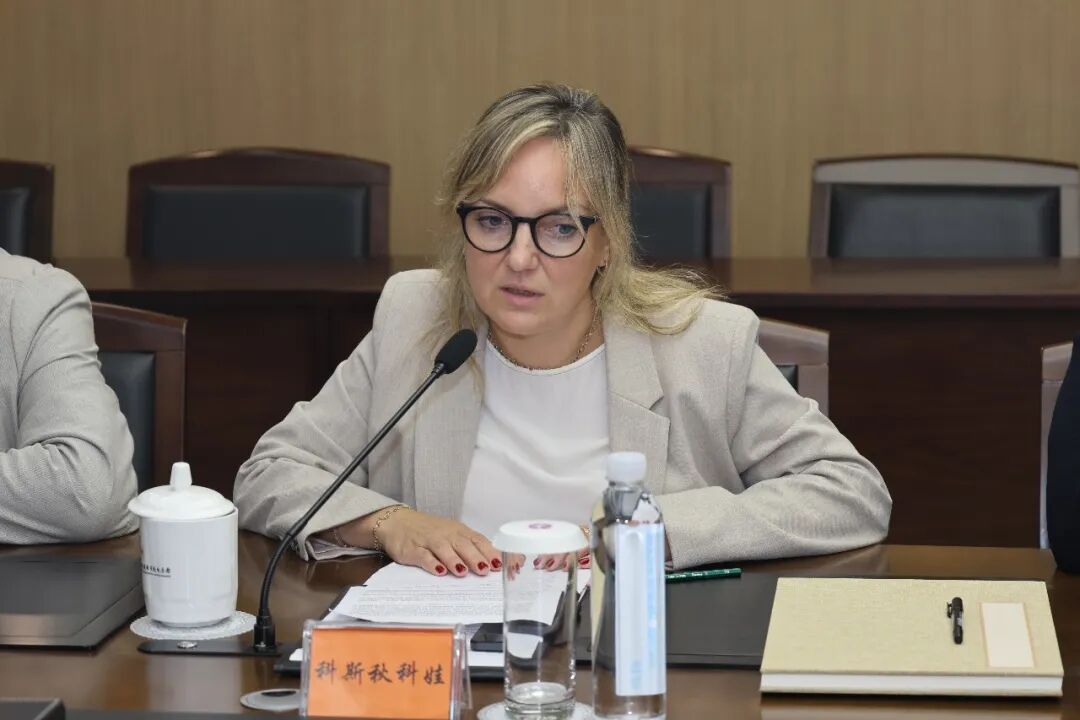
Elena Gennadyevna Kostyukova, Deputy Director of the Moscow Kremlin Museums, said, “This is an unforgettable and deeply moving exhibition. It documents modern Chinese history and is also a faithful record of modern world history. The facts of the Nanjing Massacre are known throughout the world. Every museum in every country has a duty to pass history on. I am deeply grateful to our colleagues at the Memorial Hall for their work and contribution in preserving records of the Nanjing Massacre, allowing the world to remember this moment in history.”
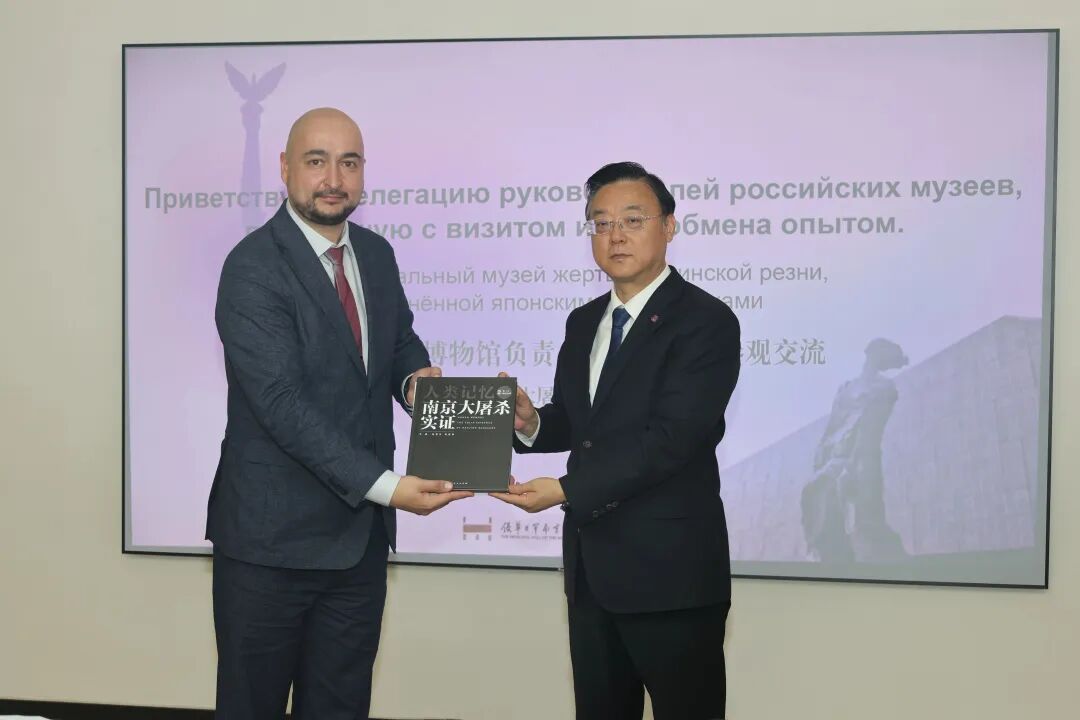
Zhou Feng, Director of the Memorial Hall, presents books on the Nanjing Massacre to the delegation of Russian museum leaders
Afterward, they carefully wrote their heartfelt messages in the guestbook:
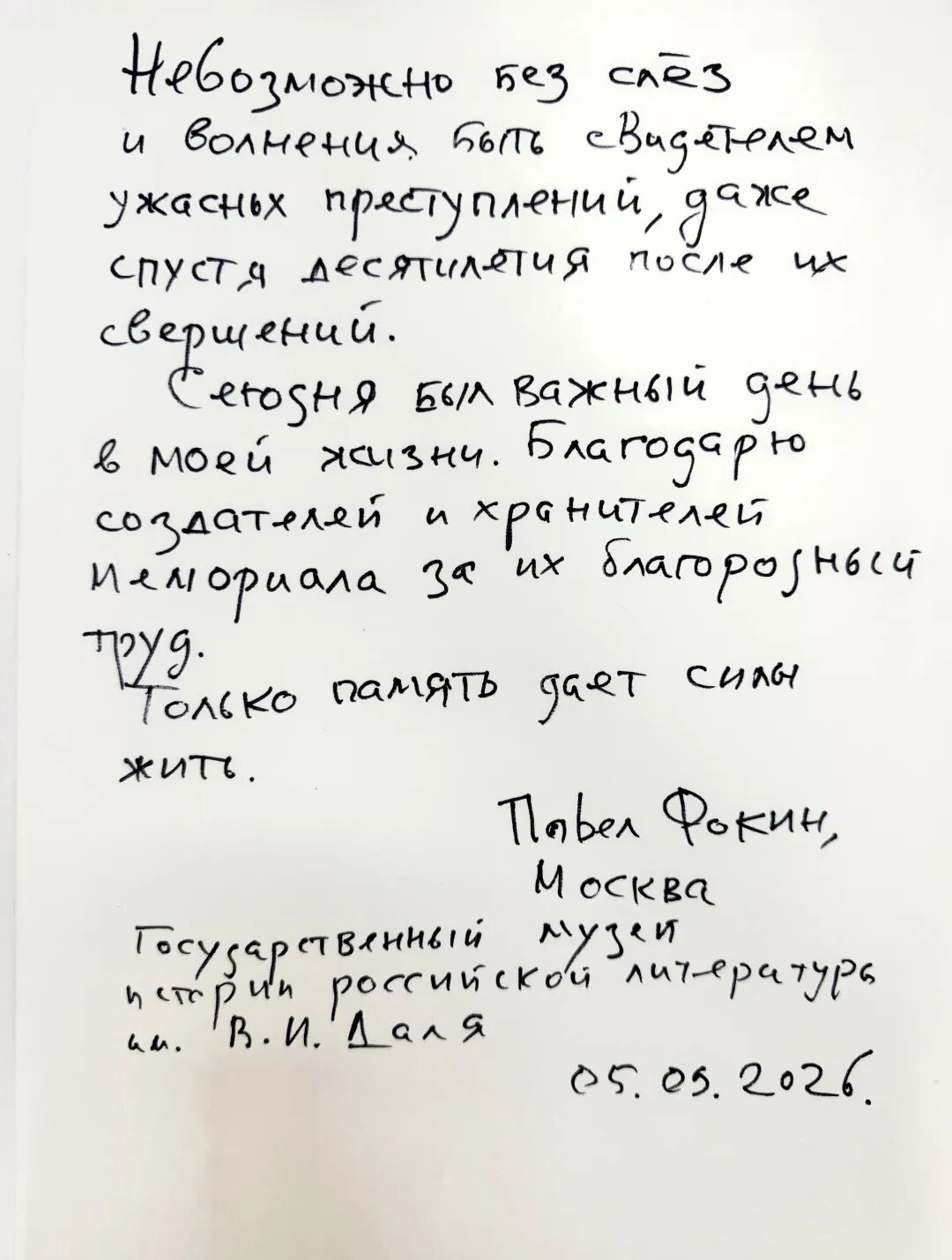
“Although decades have passed since this tragedy, confronting these horrific crimes still brings tears to our eyes and stirs profound emotions. Today has been an exceptionally meaningful day in my life. I thank those who founded this Memorial Hall and those who care for it for their noble work. Memory alone gives us the strength to live.” —Pavel E. Fokin, Deputy Director, Vladimir I. Dahl State Museum of the History of Russian Literature
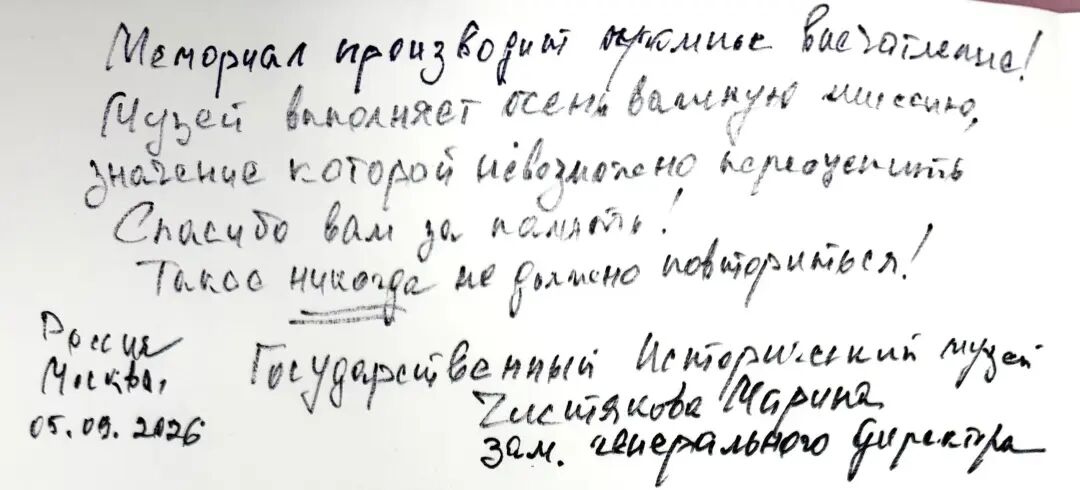
“This Memorial Hall has made a profound impression on me! It has a vitally important mission whose significance cannot be overstated. Thank you for preserving this memory! Such a tragedy must never happen again!” —Marina Viktorovna Chistyakova, Deputy Director, State Historical Museum
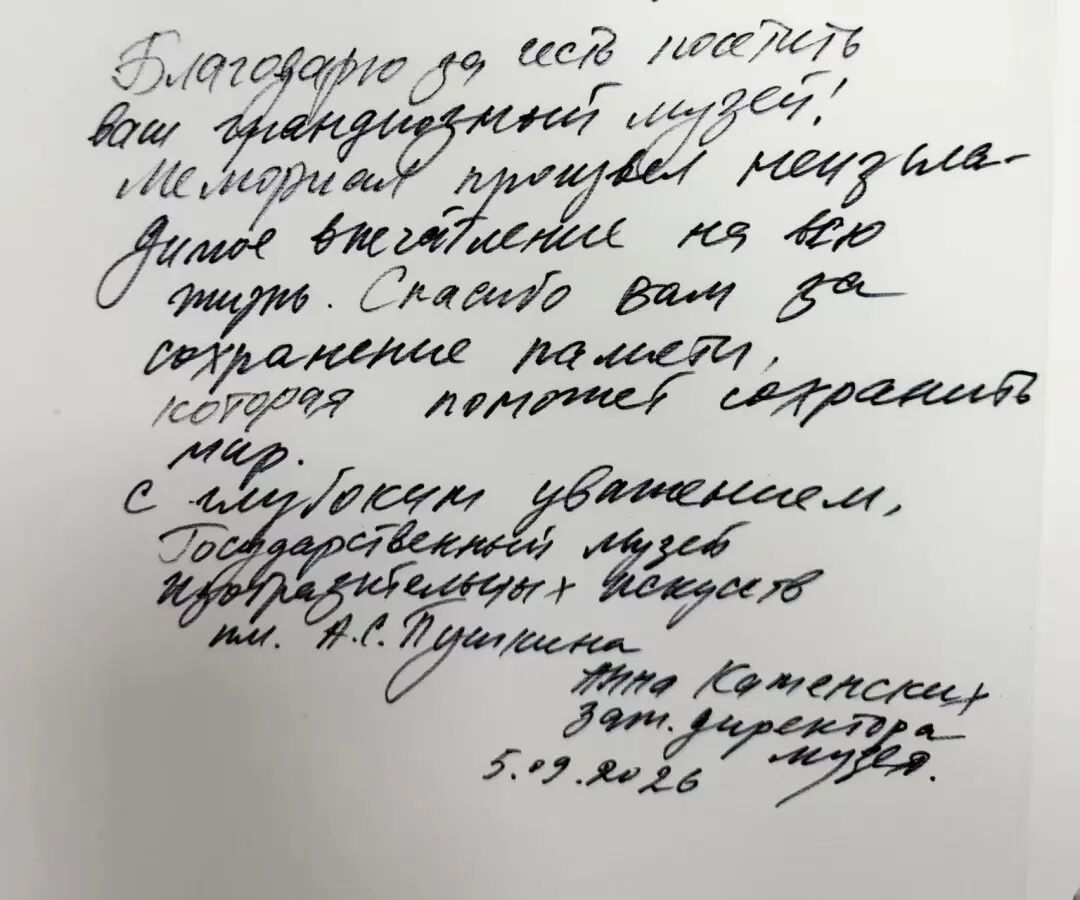
“Thank you for the opportunity to visit this unique Memorial Hall! It leaves an indelible impression on every visitor. Thank you for preserving historical memory, which will help safeguard peace. With the utmost respect.” —Anna Aleksandrovna Kamenskikh, Deputy Director, Pushkin State Museum of Fine Arts
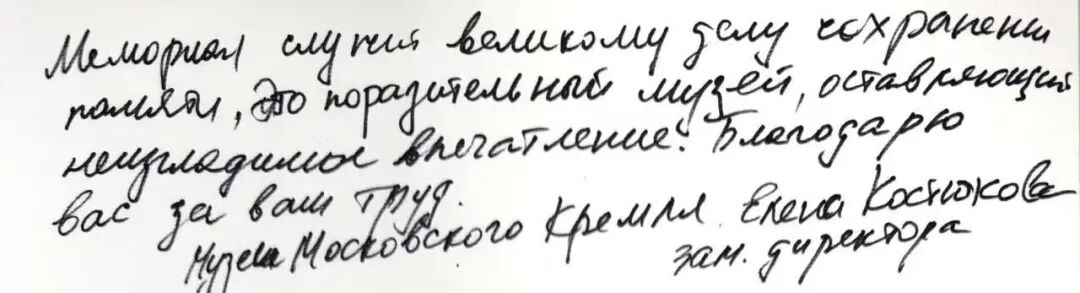
“Dedicated to the great task of preserving memory, this extraordinary Memorial Hall moves visitors deeply and leaves a lasting impression! Thank you all for your work.” —Elena Gennadyevna Kostyukova, Deputy Director, Moscow Kremlin Museums
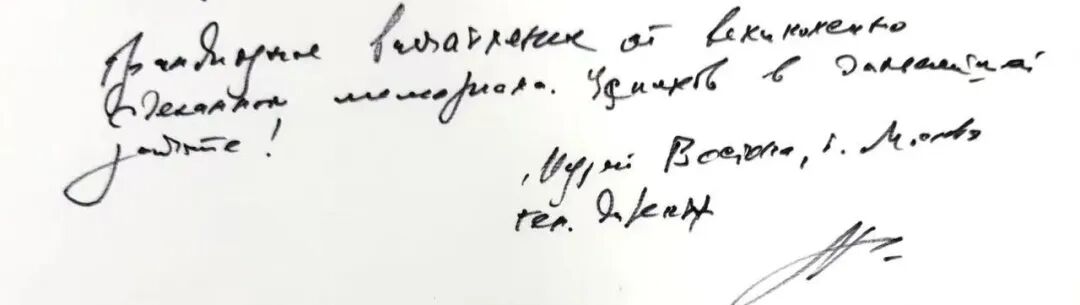
“As a visitor to this Memorial Hall, I offer my sincere thanks. Here, I have seen historical memory made tangible!” —Yevgeny Gennadyevich Saramud, Director, Gorki Leninskiye Museum-Reserve
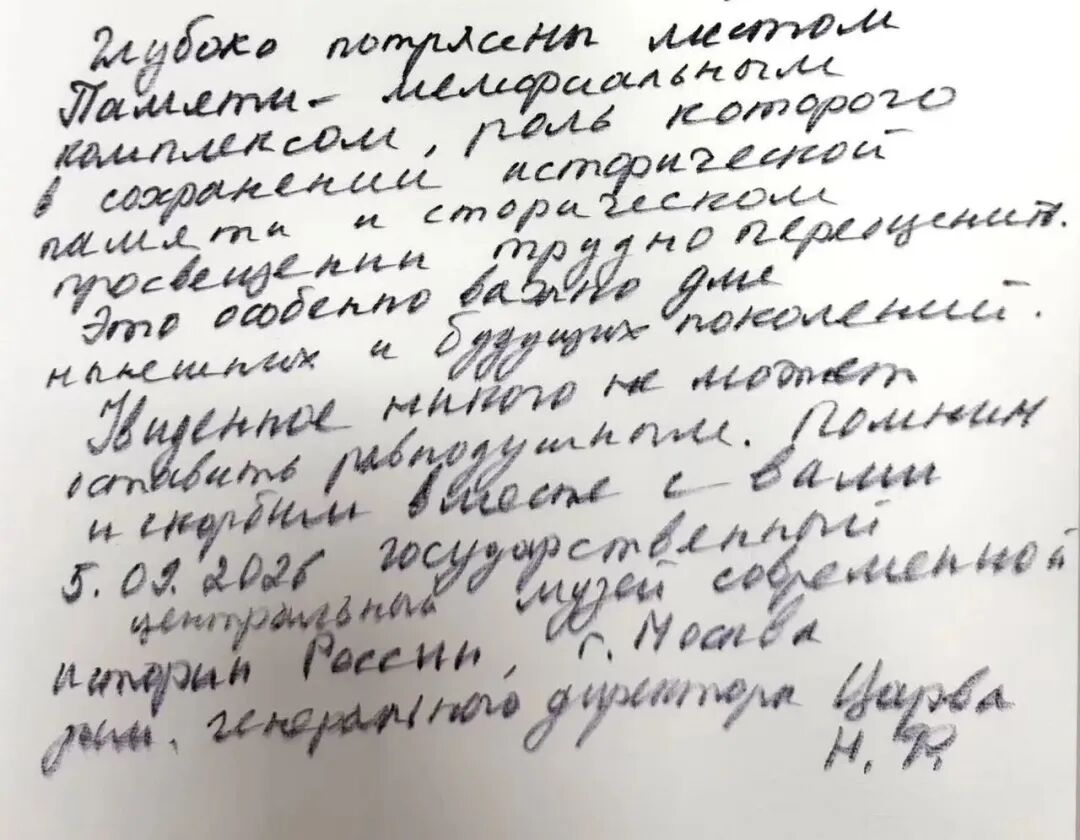
“I was deeply shaken by the exhibits at the Memorial Hall of the Nanjing Massacre Victims (by Japanese Invaders). The importance of its role in preserving historical memory and educating people about history cannot be overstated. This is especially important for present and future generations. No detached study can replace on-site research. We join you in remembrance and mourning.” —Nadezhda Fyodorovna Tsaryova, Deputy Director, State Central Museum of Contemporary History of Russia
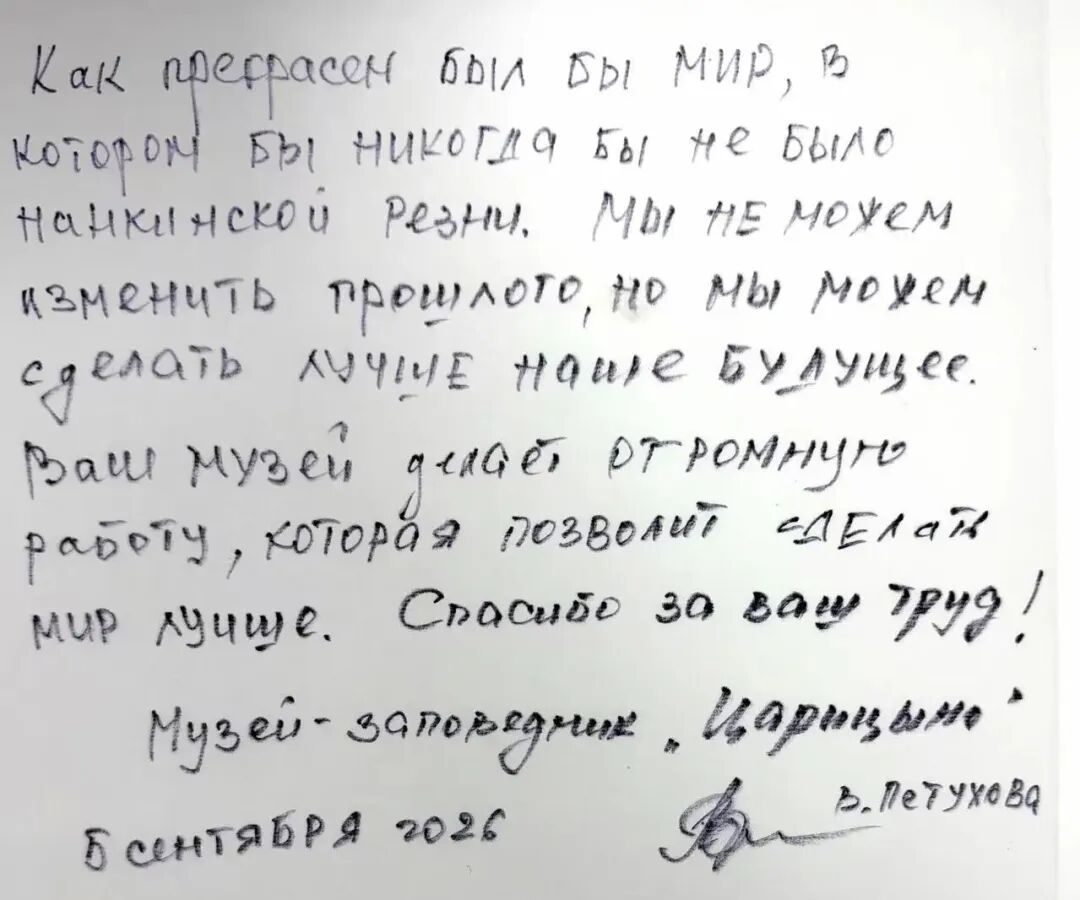
“How much better the world would be if the Nanjing Massacre had never happened. We cannot change the past, but together we can create a better future. Your important work helps make the world a better place. Thank you all for your dedication!” —Victoria Vladimirovna Petukhova, Deputy Director, Tsaritsyno Museum-Reserve
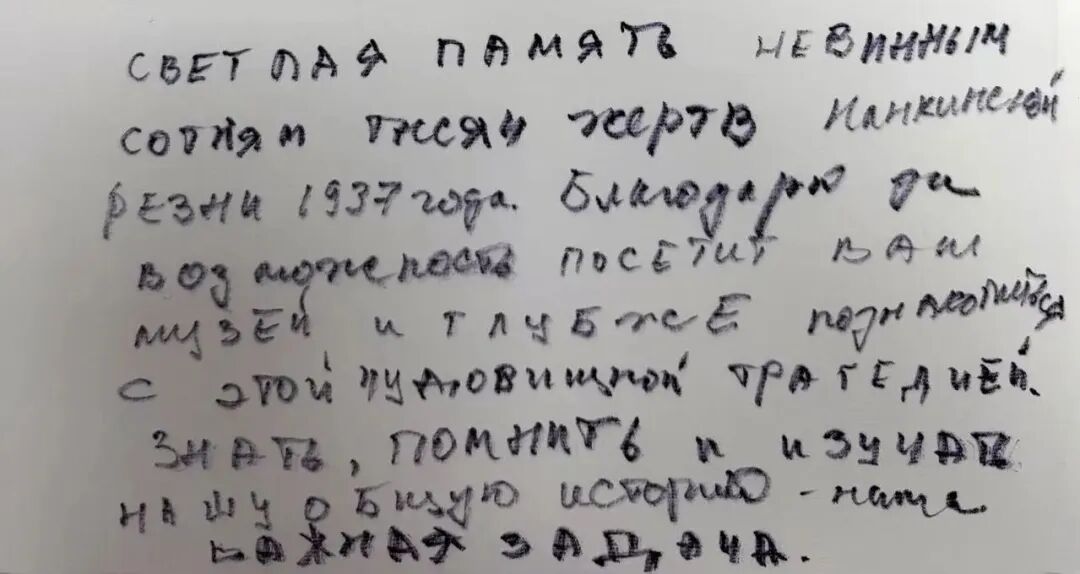
“I pay my deepest respects to the hundreds of thousands of innocent victims of the 1937 Nanjing Massacre. Thank you for the opportunity to visit your Memorial Hall and gain a deeper understanding of this horrific tragedy. Remembering, reflecting on and studying our shared history is an important responsibility we bear. With profound gratitude.” —Aynura Ishenbaevna Yusupova, Pushkin State Museum of Fine Arts
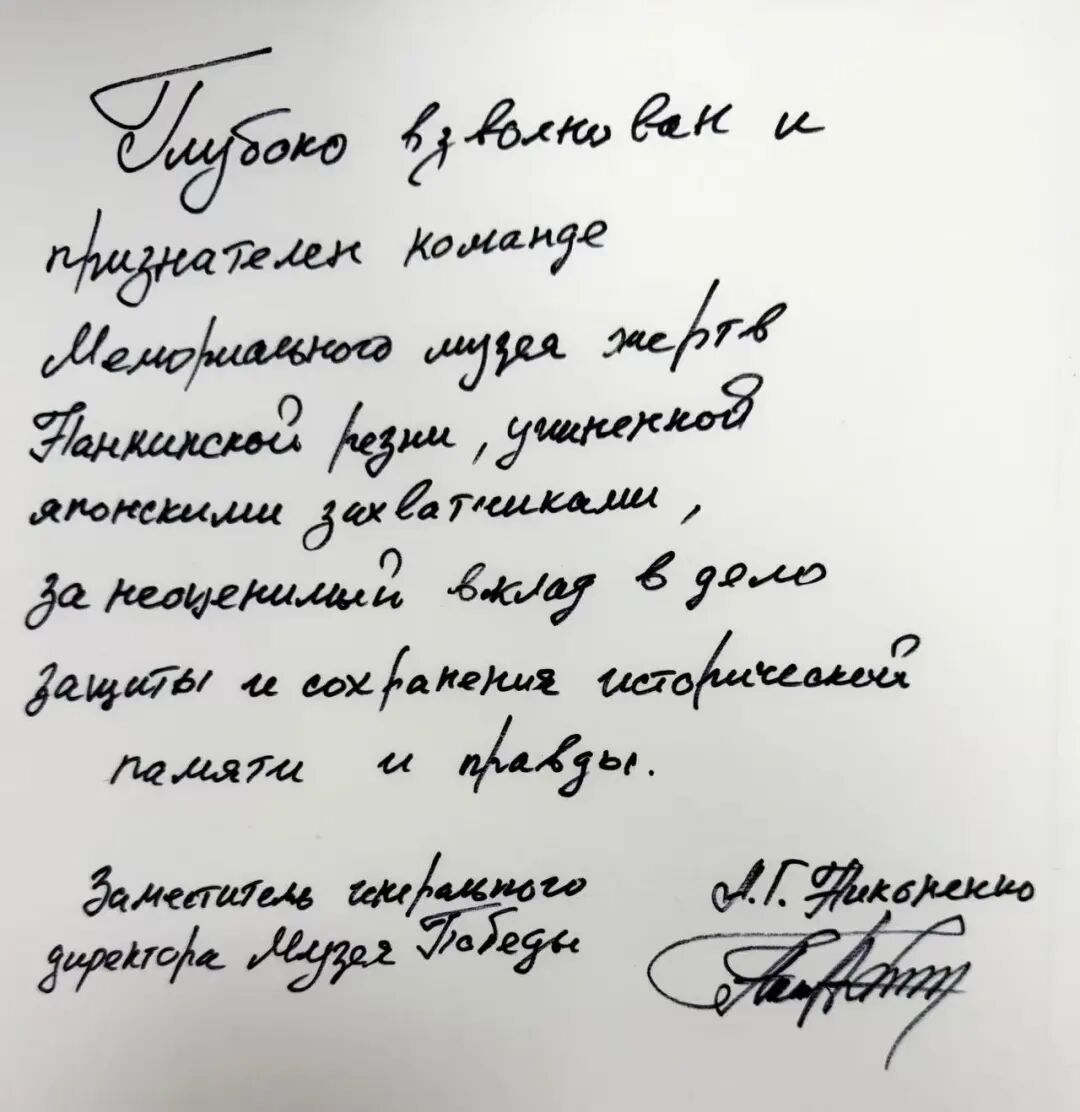
“Deeply moved by this visit, I offer my thanks to all the staff at the Memorial Hall of the Nanjing Massacre Victims (by Japanese Invaders). Thank you for your immeasurable contribution to defending and preserving historical memory and truth.” —Artem Gennadyevich Nikonenko, Deputy Director, Victory Museum