

Voices of Chinese Legal Professionals at the Tokyo Trial
“I do not seek revenge. I have no intention of holding the Japanese people responsible for the blood debt that Japanese imperialists owe us. But I believe that forgetting the suffering of the past may invite disaster in the future.” —Mei Ruao, Chinese judge at the Tokyo Trial
“Only through the Tokyo Trial were the Chinese people truly able to hold their heads high and feel vindicated.” —Xiang Zhejun, Chinese prosecutor at the Tokyo Trial
“At that moment, I felt as though hundreds of millions of my fellow Chinese stood behind me in support of the charges I was presenting. I was almost moved to tears.” —Ni Zhengyu, chief adviser to the Chinese prosecutor at the Tokyo Trial
Through overwhelming evidence, the Tokyo Trial established the crimes of Japanese aggressors and their enduring disgrace in the history of human civilization. The Chinese team, numbering just 17, gathered extensive evidence and engaged in fierce courtroom exchanges with the Japanese defense. Their irrefutable evidence laid the foundation for justice and demonstrated the resolve and integrity of the Chinese people.
A Fight for China’s Rightful Seat
Before the Tokyo Trial opened, the order in which the judges would be seated became a matter of dispute. Mei Ruao recorded the issue repeatedly in his diary. It was ultimately decided that the judges would sit in the order in which their countries had signed the Japanese Instrument of Surrender as the nations accepting Japan’s surrender. Mei Ruao sat immediately to the left of the Tribunal’s President, William Webb.
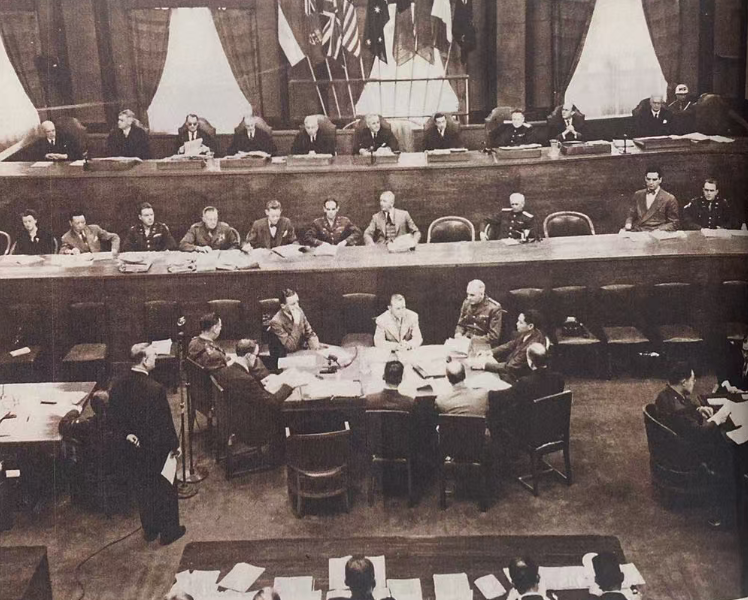
The judges’ bench occupies the highest position at the front of the courtroom; Mei Ruao is seventh from the left
In his diary entry for April 29, 1946, Mei Ruao wrote:
He [author’s note: the Central News Agency’s Tokyo correspondent] expressed satisfaction that my seat ranked second, immediately to the President’s left. He said he had heard many rumors circulating about the judges’ seating order... He congratulated me on safeguarding our country’s rightful standing and said he would certainly send a cable home to report it.
Mei reflected in his diary:
This is the result of our country’s eight years of bloody resistance against Japanese aggression. I can claim no personal credit. As long as our country works hard to rebuild in peace, its international standing will surely remain undiminished.
The fight over seating secured China’s rightful place and upheld the dignity of the Chinese nation.
A Sword for a Hero
On March 19, 1946, Mei Ruao flew to Tokyo from Shanghai’s Jiangwan Military Airport. Newspapers, including the Central Daily News, gave the departure prominent coverage.
After Mei arrived in Tokyo, Gu Yuxiu, then Vice Minister of Education in the Nationalist government, presented him with a sword, saying, “You have come to the capital of this aggressor nation, representing 450 million Chinese people and the millions of our deceased compatriots, to punish those chiefly responsible. There can be no more heroic undertaking. If you are not a hero, who is?”
Mei Ruao replied:
In traditional operas, an imperial sword often gives its bearer the authority to execute first and report to the emperor afterward. Today, however, we live under the rule of law: a trial must precede an execution. Otherwise, I would indeed want to execute a few of them first to assuage the hatred in my heart. These war criminals must be severely punished. Only then can we offer even a little solace to the millions of our compatriots who died unjustly.
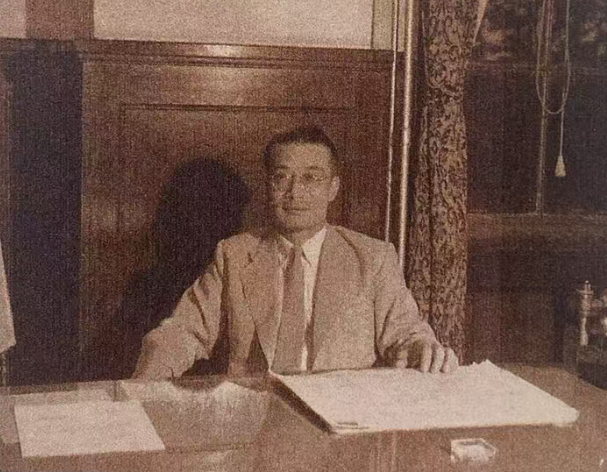
Mei Ruao
Mei Ruao felt deep anger toward the Japanese aggressors and repeatedly expressed it in his diary:
Whenever I see those men, I cannot help being filled with righteous indignation, as though the anger of all my compatriots were seeking an outlet in my chest alone... Today, I paid particular attention to each war criminal’s appearance and expression. Several times I checked their names against their photographs and their seats. Their names and faces stirred so many memories and so much anger...
Refuting the Defense
As the Chinese prosecutor at the Tokyo Trial, Xiang Zhejun participated throughout the proceedings. He addressed the court 20 times, with his statements filling 306 pages of the trial transcript. During the trial, Ichiro Kiyose, representing the Japanese defense team, challenged the Tribunal’s jurisdiction and even denied that a state of war had existed between China and Japan.
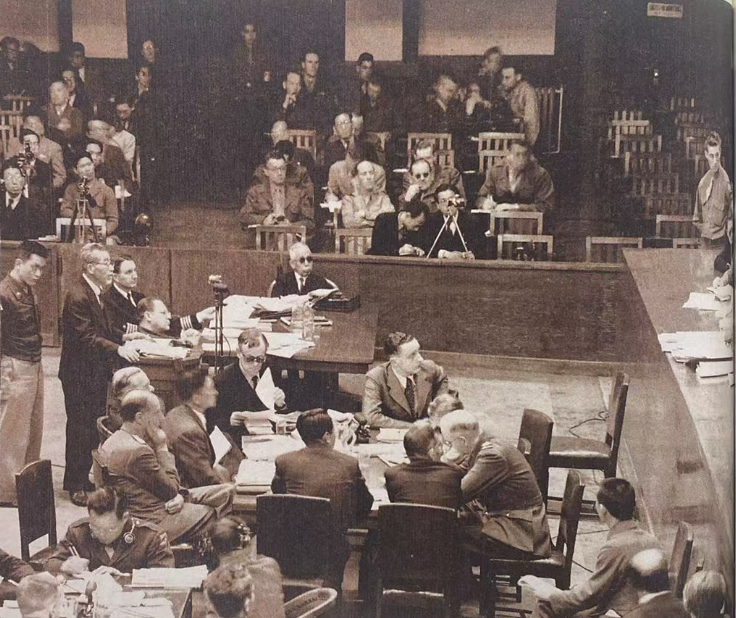
Ichiro Kiyose addresses the court on jurisdiction, challenging the prosecution’s arguments
Xiang Zhejun rebutted this specious argument in court:
Our learned defense counsel says that there was no war between China and Japan because Japan never declared war on China... On July 7, 1937, Japan started a war at the Lugou Bridge, killing hundreds of people in a single night. Japan then sent troops throughout China, killing millions of Chinese soldiers, as well as children, women and defenseless civilians—noncombatants. I believe these are facts known to the whole world. If that was not war, I ask, what is war?
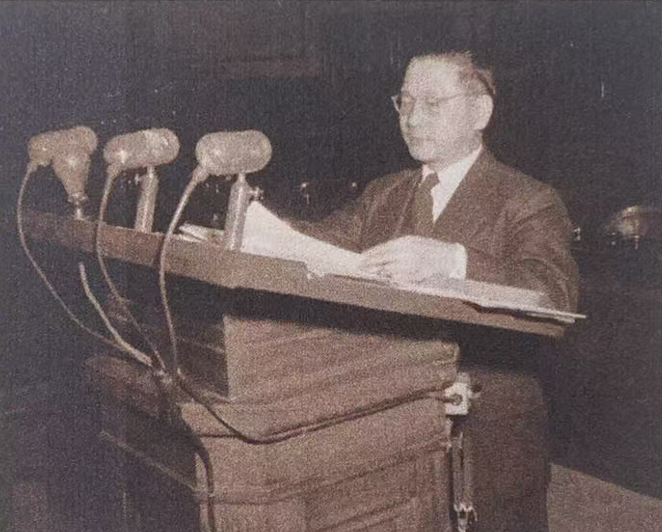
Xiang Zhejun
Xiang Zhejun’s forceful words went straight to the heart of the matter. By dismantling the defense’s falsehoods with facts, he upheld China’s legitimate rights and interests and showed the world its firm resolve to defend justice.
Turning Pale at the Mention of a Tiger
On September 16, 1947, the Tribunal began hearing the defense evidence for Japanese Class-A war criminal Kenji Doihara. Ni Zhengyu, chief adviser to the Chinese prosecutor, handled cross-examination and rebuttal. Doihara’s witness, Makoto Aizawa, falsely claimed that Doihara had merely gathered news and intelligence and described him as “honest and sincere”, attempting to conceal his crimes of aggression against China.
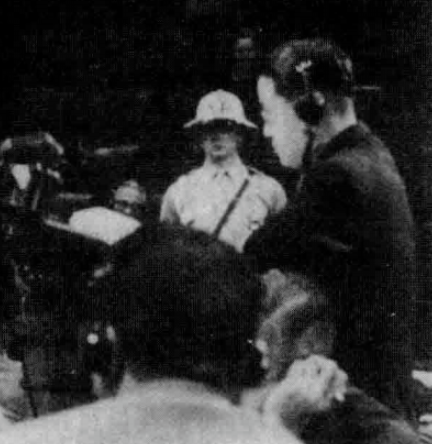
Ni Zhengyu in court
Ni Zhengyu submitted a copy of the Fengtian Special Service Agency Report bearing Doihara’s personal seal. One page stated that “people in South China turn pale at the mere mention of Doihara and Itagaki, as if hearing of a tiger.”
Ni Zhengyu wrote in his memoirs:
Doihara had actually used a Chinese idiom in the report, living up to his reputation as a “China expert”. Unfortunately for him, his cleverness backfired, and he walked straight into his own trap. Doihara and Itagaki had both committed countless crimes in China, and the Chinese people hated them to the core. Now both their names appeared together in a single document. They had not only walked into their own trap but also given us the chance to kill two birds with one stone.
Doihara’s American defense attorney, Franklin Warren, argued that the document concerned a “tiger”, was irrelevant to the case and should therefore be excluded from evidence.
Ni Zhengyu immediately returned to the lectern and explained that “turning pale at the mention of a tiger” was a Chinese idiom. Chinese people spoke of Doihara and Itagaki as they would of ferocious tigers—a measure of the two men’s brutality. Ni recalled, “The courtroom had been silent. After hearing my explanation, almost everyone burst out laughing.”
This Japanese military document became compelling evidence of Doihara’s many crimes and demonstrated the professional acumen of the Chinese prosecution team.