

New Evidence Further Documents the Atrocities Committed by the Japanese Invading Army in Nanjing
On the morning of August 15, more than 150 items (sets) of cultural relics and historical materials and more than 100 items (sets) of documentary materials newly collected during the first half of 2026 were officially added to the memorial hall’s collection. They include private letters written by Japanese soldiers who participated in the invasion of China, wartime postcards, training notes on chemical warfare, collections of wartime news reports, and diplomatic archives from France. From different perspectives, these precious cultural relics, historical materials and documentary records shed further light on the Nanjing Massacre and other atrocities committed by the Japanese invading army, providing additional solid evidence of the historical truth.
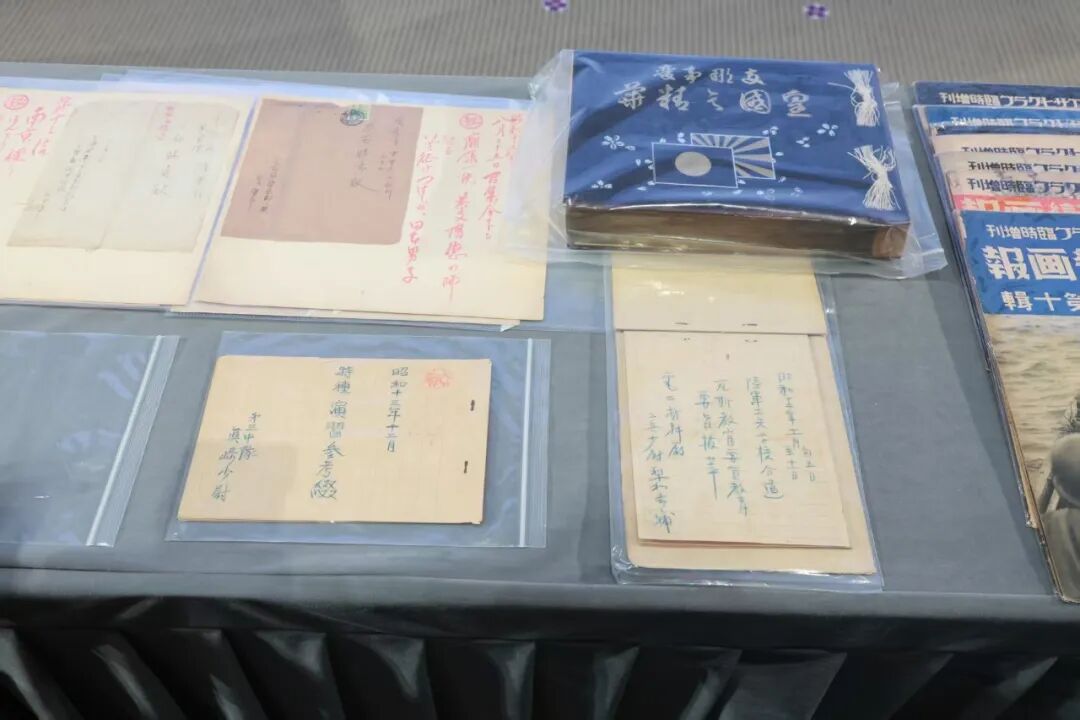
Among the materials donated this time were a number of valuable historical records collected and donated by young students. Yu Ningpeng, a high school student from Xuzhou, and his classmate Xu Weizhe jointly donated a collection of private letters written by Ishikawa Morita, a soldier of the 20th Infantry Regiment of the 16th Division of the Japanese invading army. The letters provide evidence of the mass killing of Chinese prisoners by the Japanese 16th Division during the Nanjing Massacre.
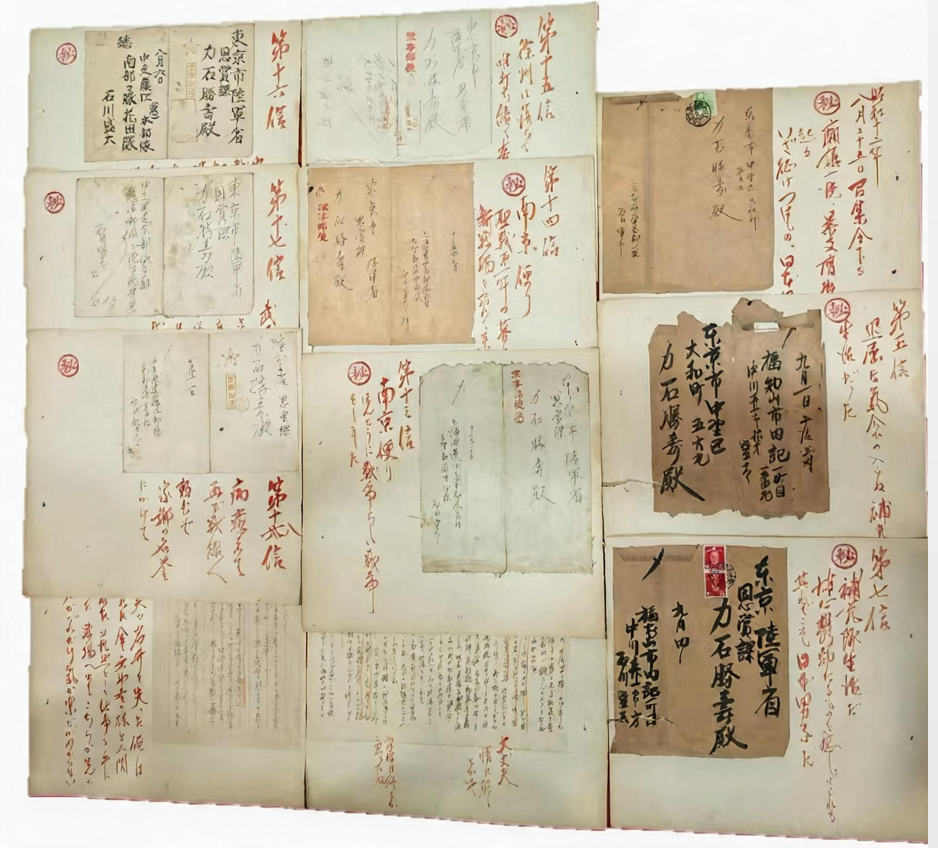
Collection of 12 private letters written by Ishikawa Morita, a soldier of the 20th Infantry Regiment of the 16th Division of the Japanese invading army
Pu Yang, a university student from Wuhan, donated a wartime postcard written on January 15, 1938, by Mitsui Shigemasa, a soldier of the 4th Company, 1st Battalion, 66th Infantry Regiment of the 114th Division of the Japanese invading army. The postcard describes how the unit captured large numbers of Chinese prisoners and weapons while attacking the Jinling Arsenal near Zhonghua Gate in Nanjing on December 12, 1937.
Xu Kairui, a middle school student from Lianyungang, donated two training notebooks documenting Japanese military preparations for chemical warfare. One was written in November 1937 by Second Lieutenant Nashikazu Yosuke, a sapper with the Japanese Army’s 2nd Telegraph Regiment. It records his training in chemical warfare at the Japanese Army Engineer School. The other contains materials recorded in December 1938 by Second Lieutenant Masaki of the Japanese Army’s 2nd Telegraph Regiment concerning chemical warfare exercises, including the performance of different types of gas masks and methods of dispersing chemical agents.
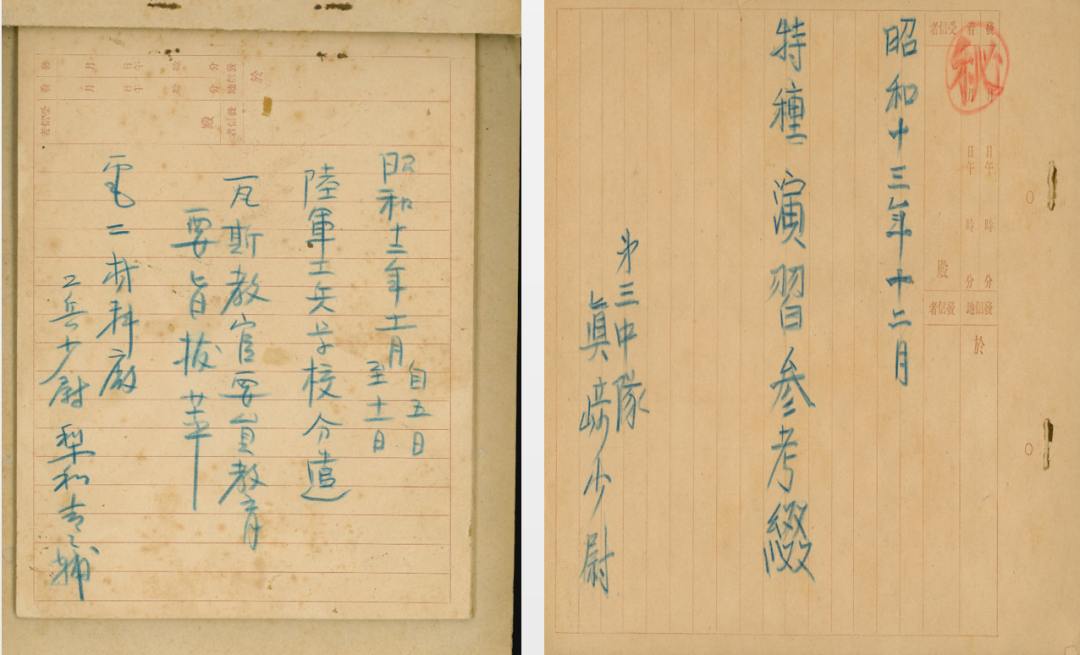
Training notebooks documenting chemical warfare instruction received by Japanese officers Nashikazu Yosuke and Masaki
Marcus Detrez, grandson of Roger Pierre Laurens, a French victim of the Japanese invasion of China; Bastien Ratat, president of the French public welfare association “Echoes of the World”; and Zhong Haosong, a Chinese youth and co-initiator of the initiative, jointly donated a collection of documents concerning the Japanese invasion of China from the Nantes Diplomatic Archives Center of the French Ministry for Europe and Foreign Affairs, together with Japanese documentary materials relating to the invasion of China. Organized by province, the archives record wartime events in Nanjing, Shanghai, Guangdong and other regions, bringing historical evidence scattered overseas back to its homeland.
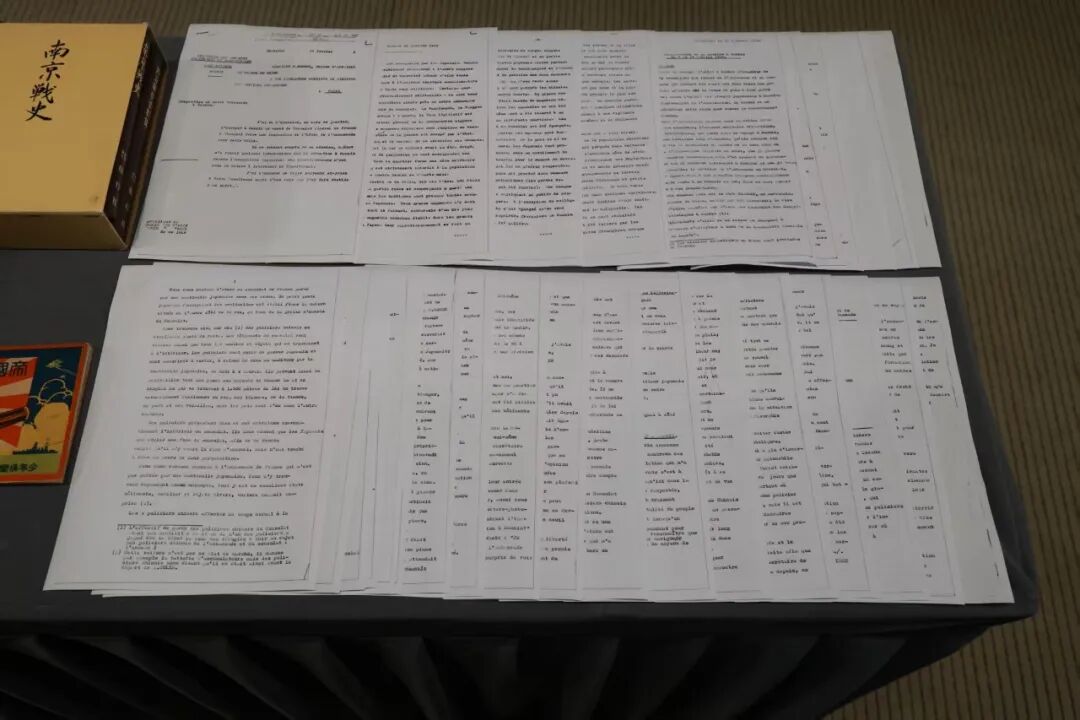
Documents concerning the Japanese invasion of China from the Nantes Diplomatic Archives Center of the French Ministry for Europe and Foreign Affairs